



Trucking Accident Causes & What You Should Do Next


Learn the top trucking accident causes and get clear steps on what to do next to protect your health, rights, and claim after a serious truck crash.
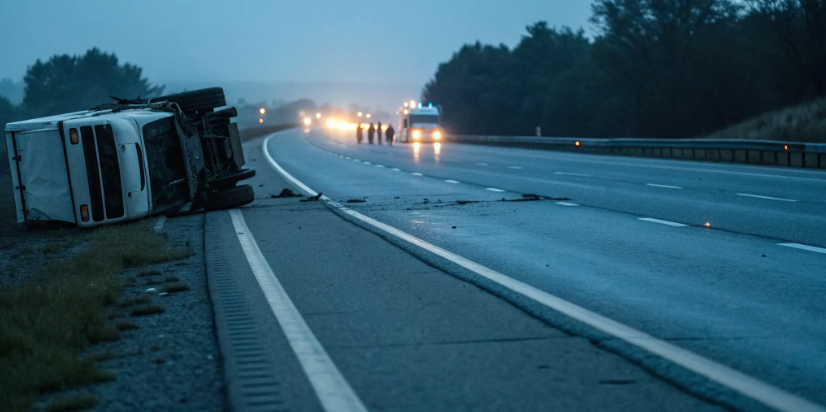
The sheer physics of a trucking accident are terrifying. A fully loaded semi can weigh up to 80,000 pounds, while the average car is around 4,000. In a collision, the occupants of the smaller vehicle almost always suffer the most severe consequences. Unfortunately, this power imbalance doesn’t end at the crash scene. Trucking companies and their insurers have vast resources dedicated to minimizing their liability and protecting their profits. They will work quickly to control the narrative and gather evidence that serves their interests, not yours. This guide is designed to arm you with the knowledge you need to fight back, from understanding the causes of these accidents to knowing your legal rights under Pennsylvania law.
Key Takeaways
- Fault Often Extends Beyond the Driver: After a crash, liability can fall on multiple parties, including the trucking company for negligent practices, a manufacturer for faulty equipment, or even the cargo loaders.
- Trucking Companies Have Strict Legal Duties: Federal and state laws require companies to properly train drivers, maintain their fleets, and follow safety rules. Proving they failed to do so is a key part of building a strong case.
- Pennsylvania’s Two-Year Deadline is Strict: You have a limited window to file a lawsuit after a truck accident. Acting quickly to preserve evidence and speak with an attorney is essential to protect your right to compensation.
What Causes Most Truck Accidents?
When a massive commercial truck is involved in a crash, the consequences can be devastating. Understanding why these accidents happen is the first step toward holding the right people accountable. Unlike a typical car accident, a truck crash often involves multiple factors, from the driver’s actions to the trucking company’s policies. It’s rarely a simple case of one person making a single mistake. Instead, it’s often a chain of events that leads to a collision. If you or a loved one has been in a crash, figuring out the cause is critical for your injury law claim. Let’s look at some of the most common reasons these accidents occur on our roads.
Driver Fatigue
Truck drivers are under immense pressure to meet tight deadlines, which often means driving for long stretches without adequate rest. They spend hours on the road, sometimes driving through the night to deliver their cargo on time. This demanding schedule can lead to severe fatigue. A tired driver is a dangerous driver. Being exhausted slows reaction times, impairs judgment, and can even cause someone to fall asleep at the wheel. While federal regulations limit how many hours a trucker can drive, these rules are sometimes bent or broken by companies pushing for faster deliveries. When a driver pushes past their physical limits, they put everyone else on the road at risk.
Distracted or Impaired Driving
We all know the dangers of distracted driving, but the risks are magnified when the vehicle weighs up to 80,000 pounds. Using a cellphone, eating a meal, adjusting the GPS, or even changing the radio station can divert a driver’s attention long enough to cause a catastrophic accident. Impaired driving is another serious issue. A driver operating a commercial truck under the influence of alcohol or drugs is not just negligent; it’s a serious crime that requires a strong criminal defense. For the victims, proving that a driver was distracted or impaired is a key part of building a strong case and getting the compensation they deserve for their injuries.
Poor Vehicle Maintenance
A commercial truck is a complex piece of machinery with thousands of moving parts that need regular inspection and maintenance. Unfortunately, some trucking companies cut corners on upkeep to save money. According to the Insurance Institute for Highway Safety (IIHS), problems with truck equipment, especially brakes, are a frequent cause of crashes. Worn-out tires, faulty steering, and broken lights can also lead to a driver losing control. Trucking companies have a legal responsibility to keep their vehicles in safe, working order. When they fail to do so, they can be held liable for the harm that results from mechanical failure. An experienced Pittsburgh injury lawyer can investigate maintenance logs to uncover this type of negligence.
Bad Weather and Road Conditions
Anyone who drives in Pennsylvania knows how quickly the weather can turn. Rain, snow, and ice create treacherous conditions for all drivers, but they are especially dangerous for large trucks. A fully loaded tractor-trailer needs a much longer distance to stop than a passenger car, and that distance increases significantly on wet or slick roads. Truck drivers are trained professionals who are expected to adjust their speed and driving habits to match the conditions. When they drive too fast for the weather or fail to account for poor road visibility, they are acting negligently. This failure to adapt can easily lead to a serious or even fatal accident on roads like the I-76 or I-79.
Truck Accidents by the Numbers
Understanding the statistics behind truck accidents can highlight just how serious these incidents are. The numbers paint a clear picture of the risks on the road and show why getting the right legal help is so important after a collision. When you’re dealing with the aftermath of a crash, knowing the facts can empower you to take the right steps to protect yourself and your family.
Fatal Crashes and Recent Trends
Large trucks are a constant presence on our highways, but their size and weight contribute to devastating outcomes in an accident. In 2023 alone, 4,354 people died in crashes involving large trucks. What’s especially alarming is that the majority of those who lost their lives were not the truck occupants. Of these fatalities, 65% were people in passenger vehicles, and another 17% were pedestrians, bicyclists, or motorcyclists. While trucks only make up about 5% of all registered vehicles, they account for 10% of all miles driven, which means they have a significant impact on road safety. These statistics underscore the severe consequences of a truck accident and the need for experienced injury law representation.
Who Is Most at Risk in a Truck Crash?
In a collision between a commercial truck and a passenger car, the laws of physics are not on the side of the smaller vehicle. A loaded tractor-trailer can be 20 to 30 times heavier than a car, creating a massive imbalance of force during a crash. This is why the occupants of passenger vehicles bear the brunt of the impact and suffer the most severe injuries. A particularly dangerous type of collision is an underride crash, where a smaller car slides underneath the trailer of a large truck. These accidents are often fatal. If you or a loved one has been injured, it’s critical to understand that the odds are stacked against you, making a strong legal advocate essential.
Common Myths About Trucking Safety
Many people assume that truck accidents are constantly on the rise, but the data shows that the number of crashes has actually decreased in the last couple of years. Another common misconception is that all truck drivers are reckless. While driver error is a major factor, the causes are often complex. The most frequent reasons for truck accidents include driver fatigue, distracted driving, speeding, and driving in large blind spots known as “no-zones.” Other issues, like improper cargo loading or poor vehicle maintenance, can also lead to catastrophic failures on the road. Because the cause isn’t always clear, a thorough investigation is necessary to determine who is truly at fault.
The Aftermath of a Truck Accident
A collision with a commercial truck is rarely a minor event. The sheer size and weight difference between a large truck and a passenger vehicle means the consequences are often severe and long-lasting. The impact goes far beyond the initial crash, creating ripples that affect every area of a victim’s life, from their physical health and financial stability to their emotional well-being. Understanding the full scope of these challenges is the first step in figuring out how to move forward.
When you’re dealing with the fallout, it can feel overwhelming. The path to recovery is often complicated, involving extensive medical treatment, difficult financial decisions, and a heavy emotional burden. You might be facing a mountain of medical bills while being unable to work, all while trying to cope with the trauma of the accident itself. It’s a journey no one should have to walk alone. An experienced legal team can help you handle the complexities of insurance claims and legal proceedings, allowing you to focus on what truly matters: healing yourself and supporting your family. We’ve seen firsthand how these accidents turn lives upside down, and we’re here to help you find your footing again.
Severe Physical Injuries
The injuries sustained in a truck accident are frequently catastrophic. Unlike a typical car accident, the force involved can lead to life-altering physical damage. It’s common for victims to suffer from traumatic brain injuries, crushed vertebrae, or severed nerves that result in partial or complete paralysis. These are not injuries that heal in a few weeks; they often require years of intensive medical treatment, including surgeries, physical therapy, and ongoing rehabilitation.
The road to recovery can be incredibly challenging, and many survivors live with chronic pain and permanent disabilities. These conditions can fundamentally change your ability to work, care for your family, or even perform daily tasks. Pursuing injury law claims is often necessary to secure the resources needed for long-term care and to adapt to a new way of life.
The Financial Toll on Families
The physical recovery is only part of the story. The financial strain following a truck accident can be devastating for an entire family. Medical bills for emergency care, hospital stays, and specialized treatments can accumulate with shocking speed. At the same time, the primary earner may be unable to work for months or even permanently, leading to a sudden loss of income that puts the family’s financial stability at risk.
This combination of mounting expenses and lost wages creates immense pressure. Families may struggle to pay their mortgage, cover daily living costs, and afford the necessary medical equipment or home modifications for their loved one. The financial burden adds another layer of stress to an already traumatic situation, making it difficult to focus on healing. It is critical to contact us to understand your options for recovering these costs.
Long-Term Emotional and Psychological Trauma
While physical injuries are visible, the emotional scars from a truck accident can be just as damaging and far more difficult to see. Survivors often grapple with significant psychological trauma that lingers long after the crash. Conditions like post-traumatic stress disorder (PTSD), severe anxiety, and depression are common. The constant memory of the event can trigger flashbacks, nightmares, and a persistent fear of driving or even leaving the house.
This emotional trauma complicates the recovery process, affecting relationships, personal well-being, and the ability to return to a normal life. It’s a heavy burden to carry, and it deserves the same level of attention and care as any physical injury. Hearing the stories from past clients can show you that you are not alone in this struggle and that support is available.
Can Technology Prevent Truck Accidents?
While many truck accidents come down to human error, technology is playing a bigger and bigger role in making our roads safer. Modern trucks can be equipped with sophisticated systems designed to prevent crashes before they happen or at least reduce their severity. These advancements are not just futuristic ideas; they are active on trucks today, helping to address common issues like driver fatigue, distraction, and mechanical failure. From systems that automatically apply the brakes to devices that monitor a driver’s hours, technology offers a crucial layer of protection for everyone on the road.
However, technology is not a perfect solution. These systems can fail, they may not be installed on all trucks, and they cannot account for every possible scenario. When an accident does happen, determining whether a truck’s safety technology was working properly can become a key part of an injury law claim. Understanding what these systems do and how they can fail is important for holding the right parties accountable after a crash.
Automatic Braking and Stability Control
Two of the most impactful safety features on modern trucks are automatic emergency braking (AEB) and electronic stability control (ESC). Electronic stability control is a lifesaver, especially for top-heavy semi-trucks that are prone to rolling over. It helps prevent these types of accidents by automatically applying brakes to individual wheels when it detects a skid or instability. Meanwhile, new safety technologies like AEB use sensors to detect a potential collision and can apply the brakes faster than a human driver ever could. This can prevent a crash entirely or significantly reduce the impact speed, making the outcome far less severe.
Driver Monitoring and Electronic Logs
Driver fatigue is a persistent and serious danger in the trucking industry. To combat this, federal regulations limit how many hours a driver can be on the road. In the past, drivers kept paper logbooks, which could easily be falsified. Today, electronic logging devices (ELDs) are mandated for most commercial trucks. These devices connect directly to the truck’s engine and automatically record driving time, ensuring drivers stick to their required rest periods. This technology is a straightforward way to prevent fatigue-related crashes and hold both drivers and their companies accountable for following critical safety rules.
Collision Warning Systems
Forward collision warning systems act as a second set of eyes for the driver. Using radar and cameras, these systems scan the road ahead and alert the driver to stopped or slow-moving traffic. If the driver does not react in time, the system can trigger the automatic emergency braking. The results are impressive: Automatic Emergency Braking systems can reduce front-to-rear truck crashes by over 40%. By providing those few extra seconds of warning or intervention, these systems can be the difference between a close call and a catastrophic accident, protecting everyone on the highway.
Advanced Vehicle Maintenance Tech
A truck is a complex machine, and a single component failure can have devastating consequences. Problems with brakes and tires are among the most common equipment-related causes of truck accidents. To address this, modern trucks are often equipped with advanced diagnostic systems that continuously monitor the health of critical parts. These systems can detect issues like low tire pressure or brake problems before they become critical failures on the road. By alerting the driver or fleet manager to a needed repair, this technology helps ensure that trucks are in safe, working condition before they even begin a trip.
What Are Trucking Companies Responsible For?
When a large commercial truck is involved in an accident, the driver isn’t the only one under scrutiny. The trucking company that owns the vehicle and employs the driver also has significant legal responsibilities. Under a legal principle known as “vicarious liability,” an employer can be held responsible for the negligent actions of its employees. This means that if a truck driver’s mistake causes a crash, the company they work for can be held accountable for the resulting harm.
This is a critical aspect of any truck accident claim. Trucking companies are required by law to operate safely, and this goes far beyond just hiring people with commercial driver’s licenses. Their duties include ensuring their drivers are qualified and well-trained, their vehicles are properly maintained, and they follow all federal and state safety rules. When a company’s actions, or lack of action, contribute to an accident, they can be held liable. Pursuing a claim against a large trucking corporation and its insurance provider is complex, which is why understanding their specific duties is the first step in seeking the compensation you deserve. If you’ve been injured, our injury law team can help you understand your options.
Following Federal Safety Regulations
Trucking is a heavily regulated industry for a reason. The Federal Motor Carrier Safety Administration (FMCSA) sets strict rules that companies must follow to keep our roads safe. These aren’t just suggestions; they are legal obligations. Trucking companies must ensure their operations comply with all federal and state regulations, which cover everything from how many hours a driver can be on the road to how cargo must be secured. When a company ignores these rules, by pushing drivers to exceed their service hour limits, for example, they are not only breaking the law but also creating a dangerous situation for everyone. A violation of these safety regulations can serve as powerful evidence of negligence in an accident claim.
Properly Training and Vetting Drivers
A trucking company’s responsibility begins long before a driver ever gets behind the wheel of one of their rigs. They have a duty to carefully vet and properly train every person they hire. This includes conducting thorough background checks, reviewing driving records, and ensuring the applicant is fully qualified and licensed. A trucking company may be held responsible when its failures contribute to an accident. Whether due to poor hiring practices that put an unsafe driver on the road or a lack of ongoing training, the company’s choices can have devastating consequences. Pressuring drivers to meet unrealistic deadlines can also lead to reckless behavior, and the company can be held accountable for creating that environment.
Maintaining a Safe Fleet
Commercial trucks cover hundreds of thousands of miles and carry immense weight, which means they experience significant wear and tear. Trucking companies are legally required to keep their vehicles in safe, working condition through regular inspections and maintenance. This includes everything from brakes and tires to steering systems and signal lights. Detailed maintenance logs must be kept for every vehicle in the fleet. When a company cuts corners on repairs or fails to perform routine inspections to save money, they are knowingly putting a dangerous vehicle on the highway. A mechanical failure due to poor maintenance is not just an accident; it’s a direct result of the company’s negligence.
Carrying Adequate Insurance
Due to the immense damage a commercial truck can cause, federal law requires trucking companies to carry much higher levels of insurance than standard passenger vehicles. This insurance is meant to cover the catastrophic costs that often result from a serious truck accident, including extensive medical bills, lost income, and long-term care. The trucking company can be liable for its own actions and for the negligence of its driver. This insurance coverage is what provides the funds for victim compensation. However, these commercial insurance carriers are aggressive and focused on protecting their bottom line. This is why you need an experienced legal team to fight for your rights. If you need help, contact us for a consultation.
Who Is Liable After a Truck Accident?
Figuring out who is at fault after a truck accident is often more complicated than it seems. Unlike a typical car crash involving two drivers, a commercial truck accident can involve multiple responsible parties. Liability might rest with the driver, the company that owns the truck, the manufacturer of a faulty part, or even the crew that loaded the cargo. An experienced injury law attorney can investigate the crash to identify every party that shares responsibility for your injuries and losses. This is a critical step in making sure you receive the full compensation you deserve.
The Trucking Company
A trucking company’s responsibility goes far beyond just hiring drivers. These companies have a legal duty to properly train their drivers, maintain their vehicles in safe working order, and follow all federal and state regulations. A trucking company may be held responsible when its actions or failures contribute to an accident. For example, if the company pressures drivers to exceed legal driving hour limits to meet deadlines, or if it fails to perform required maintenance on its fleet, it can be held liable for a resulting crash. Proving this negligence requires a thorough investigation into company records, a process our team is prepared to handle.
The Truck Driver
While the driver behind the wheel is often a central figure in an accident, they may not be the only one to blame. In many situations, a legal principle called vicarious liability comes into play. This means a trucking company can be held liable for the negligence of its driver if the crash happened while the driver was performing job-related duties. So, if a driver was speeding, distracted, or driving under the influence, both the driver and their employer could be held accountable. It’s important to explore every angle to determine who is ultimately responsible for the actions of the driver.
Third Parties like Manufacturers or Mechanics
Sometimes, the cause of a truck accident has nothing to do with the driver or the trucking company’s policies. Liability can extend to other parties whose negligence contributed to the crash. For instance, if a tire blows out because of a manufacturing defect, the tire manufacturer could be at fault. If the truck’s brakes fail due to a shoddy repair job, the mechanic or maintenance shop could be held responsible. Even the company that loaded the truck’s cargo could be liable if an unbalanced or unsecured load caused the driver to lose control. The team at Logue Law Group knows how to trace the accident back to its source to hold all responsible parties accountable.
What to Do Immediately After a Truck Accident
The moments following a collision with a large truck are often chaotic and disorienting. What you do next can have a major impact on your health, safety, and your ability to recover fair compensation for your injuries and losses. While it’s difficult to think clearly under such stress, taking a few specific steps can protect you and your potential legal claim. If you are seriously injured, your first and only priority should be your well-being. But if you are able, these actions can make a significant difference.
Prioritize Safety at the Scene
Your immediate priority is to ensure the safety of yourself and others. First, check yourself and your passengers for injuries. Even if you feel fine, adrenaline can mask pain, so it’s crucial to be cautious. Call 911 right away to report the crash and request emergency medical services. If you can do so safely, move your vehicle out of the flow of traffic to prevent further collisions. If your car cannot be moved, turn on your hazard lights. The scene of a truck accident can be incredibly dangerous, so find a safe spot away from the road while you wait for help to arrive. Seeking immediate medical attention is vital, as it not only addresses your health but also creates an official record of any injuries sustained in the crash, which is important for any future injury law claim.
Protect Your Legal Rights
After an accident, be very careful about what you say. It’s natural to feel shaken or even want to apologize, but you should never admit fault to the truck driver, police officers, or any insurance representatives. Stick to the facts of what happened without speculating or accepting blame. The trucking company and its insurance provider will have a team of investigators and lawyers working to minimize their payout from the moment the crash is reported. They may try to get you to make a recorded statement that could be used against you later. You have the right to protect yourself by speaking to an attorney before talking to an insurance adjuster. An experienced Pittsburgh injury lawyer can handle these communications for you and ensure your rights are preserved from the very beginning.
Gather Key Evidence
If you are physically able to, gathering evidence at the scene can be incredibly helpful for your case. Use your phone to take pictures and videos of everything. Document the damage to all vehicles involved, the position of the trucks and cars, any skid marks on the road, and the surrounding area, including traffic signals and weather conditions. Take photos of your injuries as well. Get the truck driver’s name, license number, insurance information, and the name of the trucking company they work for. It’s also important to get the contact information of any witnesses who saw what happened. This evidence is critical because trucking companies sometimes try to avoid liability by claiming their driver is an independent contractor, and your documentation can help establish who is truly responsible.
How Pennsylvania Law Affects Your Claim
After a truck accident, the path to getting compensation isn’t always straightforward. Pennsylvania has specific laws that shape how your claim is handled, from who can be held responsible to how much you can recover. Understanding these rules is the first step in protecting your rights. It’s not just about what happened in the accident, but also about how the legal system views your role and the strict timelines you have to follow. Knowing these key legal principles can make a significant difference in the outcome of your case.
Understanding Comparative Negligence
Pennsylvania uses a rule called “modified comparative negligence.” In simple terms, this means you can still receive compensation even if you were partially at fault for the accident. However, there’s a critical limit. If a court finds you were 51% or more responsible for the crash, you cannot recover any damages. If your fault is 50% or less, your compensation will be reduced by your percentage of fault. For example, if you were found 10% at fault, your final award would be reduced by 10%. This is why having a strong case that clearly shows the other party’s liability is so important for your injury law claim.
Deadlines for Filing a Lawsuit
The clock starts ticking the moment a truck accident happens. In Pennsylvania, you generally have two years from the date of the crash to file a lawsuit. This deadline is known as the statute of limitations, and it is incredibly strict. If you miss this two-year window, you will likely lose your right to seek any compensation for your injuries, medical bills, or lost wages, no matter how strong your case is. Because evidence can disappear and memories can fade, it’s vital to act quickly. Don’t wait to get the legal process started; contact an attorney to make sure your rights are protected before time runs out.
Why You Need an Experienced Truck Accident Attorney
After a collision with a large truck, you might feel overwhelmed and unsure of what to do next. It’s tempting to think you can handle the insurance claim on your own, especially if the trucking company’s insurer seems cooperative at first. However, truck accident cases are far more complicated than a typical car accident claim. They involve powerful corporations, aggressive insurance companies, and a web of specific state and federal laws.
Trying to manage a claim yourself puts you at a significant disadvantage. The trucking company and its insurer have a team of professionals working to protect their bottom line, not your well-being. An experienced truck accident attorney acts as your advocate, ensuring your rights are protected and you receive the compensation you need to recover. From the moment you hire a lawyer, they take over the investigation, communication, and legal work, allowing you to focus on what matters most: your health and your family. A skilled injury law attorney understands the stakes and is prepared to fight for you every step of the way.
Dealing with Complex State and Federal Laws
Trucking is a heavily regulated industry for a reason. The sheer size and weight of commercial trucks make them incredibly dangerous when things go wrong. Trucking companies must follow strict federal and state regulations covering everything from driver hours and training to vehicle maintenance and cargo loading. These laws are complex and can be difficult to understand without a legal background.
An experienced attorney knows these regulations inside and out. They can quickly identify if the trucking company or driver violated a rule, such as falsifying a logbook to drive longer than legally allowed or failing to perform required inspections. Trucking companies have a legal obligation to properly train their drivers and maintain their vehicles. When they fail, a knowledgeable Pittsburgh injury lawyer can use that failure to build a strong case for negligence on your behalf.
Standing Up to Big Insurance Companies
Trucking companies are backed by large insurance carriers with deep pockets and teams of adjusters and lawyers. Their primary goal is to minimize payouts and protect their profits. They may try to pressure you into accepting a quick, lowball settlement before you even know the full extent of your injuries and financial losses. They might also try to twist your words to shift blame for the accident onto you.
This is where having an aggressive attorney on your side becomes critical. Your lawyer will handle all communications with the insurance company, preventing them from taking advantage of you. They understand the tactics insurers use and will not be intimidated. Trucking companies often have substantial resources dedicated to minimizing their liability, but a skilled attorney levels the playing field. They will calculate the full value of your claim, including medical bills, lost wages, and pain and suffering, and fight for a fair settlement. If the insurance company refuses to be reasonable, your lawyer will be prepared to take them to court.
Properly Investigating the Crash
Evidence is the foundation of any successful truck accident claim, and it can disappear quickly. The trucking company will launch its own investigation immediately, working to gather evidence that protects its interests. You need someone doing the same for you. An experienced attorney will know how to gather crucial evidence, interview witnesses, and analyze data to build a solid case.
This involves securing the truck’s electronic data recorder or “black box,” which contains information about speed, braking, and hours of service. Your attorney will also obtain driver logs, maintenance records, inspection reports, and the driver’s employment history. They often work with accident reconstruction experts to piece together exactly how the crash happened. This thorough investigation is essential for proving who was at fault and holding the responsible parties accountable. If you need a team that will dig deep for the facts, you can contact us for a free consultation.
Related Articles
- Trucking Accident Attorney Is Essential When You’re Injured by a Commercial Truck
- 5 dead in Pennsylvania crash as RV blows tire, hits tractor-trailer
- GPS Failure Isn’t Only Danger for CDL Drivers on PA Roads | Pittsburgh Criminal Lawyer Blog | May 1, 2015
- Distractions Often Cause Pedestrian Accidents | Pittsburgh Criminal Lawyer Blog | April 5, 2018
- CDL Penalties | Pittsburgh Criminal Lawyer Blog | December 22, 2021
Frequently Asked Questions
Why can’t I just deal with the trucking company’s insurance on my own?
Trucking companies and their insurers have teams of lawyers and adjusters whose main job is to protect the company’s finances. They are experts at minimizing payouts and may try to get you to accept a quick, low settlement or make a statement that hurts your claim. These cases involve complex federal regulations and deep investigations that are difficult to handle without legal experience. An attorney ensures you are on a level playing field and fights for what you are truly owed.
Is the truck driver always the only one at fault in an accident?
Not at all. While the driver’s actions are a major factor, the trucking company can also be held responsible for things like poor vehicle maintenance, inadequate driver training, or pressuring drivers to ignore safety rules. In some cases, a parts manufacturer could be at fault for a mechanical failure, or even the company that loaded the cargo could be liable if it was done improperly. A full investigation is needed to identify every party that shares responsibility.
What kind of compensation can I get after a truck accident?
Compensation is meant to cover the full range of losses you’ve suffered because of the accident. This includes all of your medical expenses, from the initial emergency room visit to long-term physical therapy. It also covers any income you lost from being unable to work and any future loss of earning ability. Beyond these financial costs, you can also seek compensation for the physical pain and emotional trauma the accident has caused you and your family.
What happens if I might have been partially to blame for the crash?
Pennsylvania law allows you to recover damages even if you were partly at fault, as long as you are not found to be 51% or more responsible for the accident. This is called comparative negligence. Your final compensation award would be reduced by your percentage of fault. For example, if you were found 10% responsible, your total recovery would be reduced by 10%. This is why it is so important to have a strong advocate who can clearly establish the other party’s liability.
How long do I have to decide if I want to file a lawsuit?
In Pennsylvania, you have a strict deadline of two years from the date of the accident to file a lawsuit. This is known as the statute of limitations. If you miss this deadline, you will lose your right to seek compensation permanently, regardless of how strong your case is. It is critical to contact an attorney well before this window closes, as building a strong case takes time and evidence can disappear quickly.